
Where cooling tower Legionella programmes still have blind spots and how rapid on-site testing closes them
Cooling tower outbreaks keep happening to operators who were, on paper, compliant. The freshest reminder is the Central Harlem cluster of summer 2025 – 118 cases, 92 hospitalisations, and seven deaths – traced by the NYC Health Department to cooling towers in the neighbourhood, including the system at Harlem Hospital. It follows the 2015 Bronx hotel outbreak (12 deaths, more than 130 cases) and recurring smaller clusters in the same city since. The pattern is international: the Edinburgh industrial cluster of 2012, and the fertiliser plant linked to the 2014 Vila Franca de Xira outbreak in Portugal (more than 300 cases). The pattern matters more than any single case: scheme compliance and outbreak control are not the same thing.
For experienced water treatment professionals and the duty holders who employ them, this is not new. What has changed is that the tools to close the gap between compliance and control are now on-site, fast, and field-proven. This piece is a frank look at where the standard cooling tower programme still leaves you exposed, and where rapid on-site testing for Legionella pneumophila now sits, alongside the laboratory scheme, not in place of it.
Why cooling towers are the asset that defines your programme
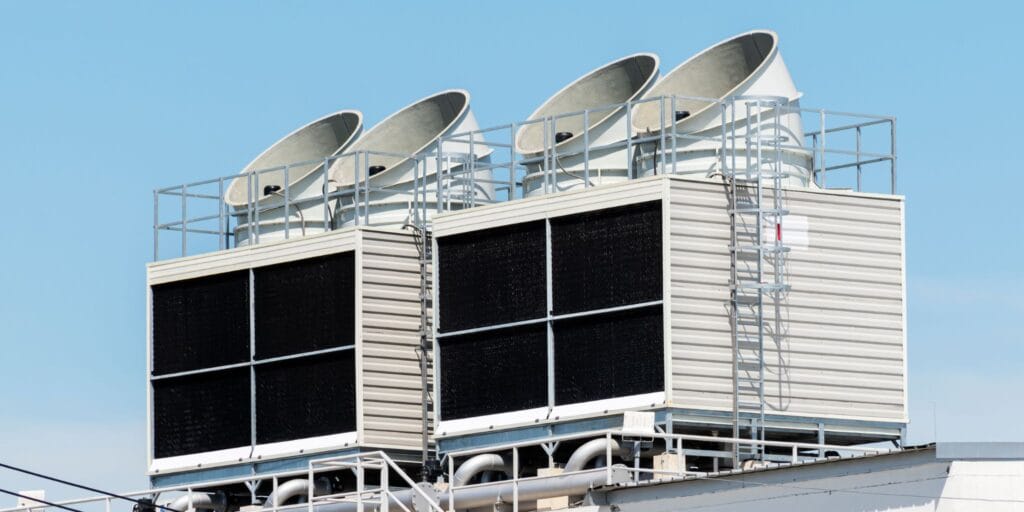
Cooling towers are aerosol generators sitting in the temperature range that Legionella pneumophila is built for. Two characteristics make them the highest-stakes asset on any L8, HSG274, or ASHRAE 12-2020 scheme.
Scale of exposure. Aerosols from a contaminated tower have been epidemiologically associated with confirmed cases several kilometres downwind. The Pas-de-Calais petrochemical outbreak in France (2003-04) traced 86 confirmed cases and 21 deaths to a single industrial cooling system, with infections reported well beyond the plant boundary. A single failure event in a tower with imperfect drift control can place tens of thousands of people in the aerosol envelope.
Hiding places. Cooling towers accumulate biofilm in fill packs, scale in basins, sludge in dead legs, and stratified water in pipework. Bulk water sampling, which is what almost all routine programmes measure, represents a fraction of the actual Legionella pneumophila habitat on site. A clean bulk sample and a colonised fill pack are not mutually exclusive.
Compliance assesses the scheme. Control requires evidence that the scheme is working on the asset, in real conditions, this week.
Where lab culture leaves cooling towers exposed
ISO 11731 culture testing is, and will remain, the regulatory reference method. The argument is not against culture testing. It is against relying on culture testing alone for an asset that aerosolises into the public domain. Each well-known limitation of culture carries a specific operational consequence on a tower.
The 10–14 day result window.
During the interval between sample and result, an undetected contaminated tower continues to aerosolise. A positive result returning on day 14 is a fortnight-old snapshot of a system that may have produced exposures across a wide downwind area in the meantime. For a Responsible Person, that is two weeks of operational decisions made without real-time data on the bacteria the programme exists to control.
The quarterly sampling cadence.
Even a fully compliant cooling tower scheme typically samples for Legionella pneumophila once a quarter. Combined with the result window, that leaves visibility of bacterial status on roughly four days in every ninety. The remaining eighty-six days are governed by surrogate indicators like biocide residual, conductivity, dip slides which describe the chemistry of the water, not the status of the organism.
Regulators are now acting on this gap. After the 2015 Bronx outbreak, New York City introduced mandatory cooling tower registration and quarterly Legionella pneumophila sampling. In the summer of 2025, a further major community cluster in Central Harlem, 118 confirmed cases, 92 hospitalisations, and seven deaths, was traced to cooling towers in the neighbourhood, including the system at Harlem Hospital and a tower at a nearby construction site. The NYC City Council responded by amending the cooling tower law again. Effective 8 May 2026, building owners are now required to test for Legionella pneumophila every 31 days when a cooling tower is operating, replacing the previous 90-day requirement, alongside steeper penalties and a substantial uplift in inspection resource. The threefold increase in testing frequency is, in essence, a regulator codifying what outbreak experience has been saying for a decade: quarterly sampling, even when fully complied with, leaves too much risk uncovered between samples. Operators in jurisdictions that have not yet followed should expect the direction of travel to be the same.
Viable But Non-Culturable (VBNC) state.
This is the gap that matters most after any intervention. Legionella pneumophila under stress, particularly after biocide shock, chlorine dioxide treatment, or monochloramine dosing, routinely enters a VBNC state in which it cannot be cultured but remains viable and infectious. The operational implication is uncomfortable: a culture-negative result immediately after disinfection can be a false reassurance, returned at exactly the moment risk perception is lowest. Recolonisation events have been documented in cooling systems that had been signed off on culture.
Recovery variability between labs and sample types.
Independent comparative work has shown that culture recovery rates vary substantially between accredited laboratories and across sample types, with biofilm-rich and low-load samples particularly prone to false negatives. For a tower being returned to service after a clean, the test most trusted by regulators is also the one most likely to miss a residual problem in the fill pack.
Rapid on-site testing as a safety net
Hydrosense is a lateral-flow antigen test for Legionella pneumophila, read on site by the engineer holding the sample. Two products serve different operational needs:
- Hydrosense (serogroup 1): targets the strain most commonly identified in confirmed Legionnaires’ disease outbreaks.
- Hydrosense PRO (serogroups 1–15): covers virtually all Legionella pneumophila serogroups in a single rapid on-site test.
For cooling tower operators, broader coverage matters because the risk is not confined to serogroup 1. Serogroups 2-15 of Legionella pneumophila are pathogenic and have been implicated in cases of Legionnaires’ disease, including incidents linked to environmental sources. A rapid on-site test that detects only serogroup 1 leaves a defensible gap on an aerosolising asset; Hydrosense PRO closes that gap on the same 25-minute timeframe.
Both products return a result in 25 minutes. Neither replaces anything in your existing scheme. They sit alongside it. The use cases below are where competent water treatment teams are already deploying them.
Between scheduled regulatory samples. A monthly or fortnightly on-site screen on the same sampling points closes most of the eighty-six day blind window without re-engineering the contract or the laboratory relationship.
Post-disinfection verification before return to service. Given the VBNC problem, a same-day on-site antigen result paired with a follow-up culture is a more defensible record than culture alone. Return-to-service is one of the highest-consequence decisions in cooling tower management; the evidence behind it should match.
Fill pack and biofilm screening without dismantling. The Hydrosense PRO Swab Test lets engineers sample fill packs and basin surfaces in situ – assessing the Legionella pneumophila habitat directly rather than the bulk water passing through it. Particularly useful before and after planned cleans.
Incident response. When a case is notified or a laboratory comes back positive, the question is whether to shut down. A 25-minute on-site result on the implicated asset is a better basis for that decision than a 10-day wait.
Dead legs, low-use outlets, and stagnant zones. Areas the risk assessment has already flagged as high-risk, but which the routine sampling schedule rarely reaches.
The output of rapid on-site testing is not a regulatory submission. It is operational evidence for the Responsible Person, the auditor, the insurer, and the internal record that says: when we made the decision, this is what we knew.
Independent validation against the regulatory reference method
The case for treating rapid on-site testing as defensible operational evidence depends on how it performs against the reference method on the same samples. In a blind third-party evaluation conducted by an ISO/IEC 17025:2017 and CDC ELITE-certified laboratory, Hydrosense PRO was tested against the CDC ELITE proficiency testing panel (Wisconsin State Laboratory of Hygiene, WLSH PT 2024 – Legionella 1), the same panel used to assess accredited culture laboratories. Across the six-sample panel:
- 100% concordance with the published correct identification of Legionella pneumophila across all samples, matching the parallel CDC culture method.
- Both serogroup 1 and serogroup 2-15 samples were correctly detected by Hydrosense PRO.
- No false positives on samples containing common confounding water-borne organisms (Aeromonas veronii, E. coli, Chryseomonas indolgenes).
- Hazard Index readings correlated with CFU/mL concentrations returned by the culture method, supporting semi-quantitative interpretation in the field.
- Result turnaround of under an hour compared with a minimum seven-day culture process on the same samples.
For a cooling tower programme, the operational implication is concrete: a same-day, on-site result with demonstrated concordance against the regulatory reference method, covering the broader serogroup range that environmental surveillance of an aerosolising asset should be expected to detect.
A defensible control model for cooling towers
Set against the operational reality of cooling towers, a modern Legionella pneumophila programme increasingly looks like a layered model. Each layer answers a different question.
- A site-specific written risk assessment, reviewed after any change to the system, the building use, the demographic of those who could be exposed, or the occupied airspace surrounding the plant.
- A named, competent Responsible Person with the authority to stop the system, and a deputy.
- A written scheme of control, followed rigorously, with chemical monitoring and dosing managed by a competent water treatment provider.
- Accredited laboratory culture testing at the cadence required by local regulation, treated as the regulatory record.
- Rapid on-site testing between regulatory samples, around any intervention, and on the high-risk areas the schedule misses – treated as the operational record.
- A documented post-treatment verification protocol that does not rely on a single culture result to clear an asset known to harbour VBNC organisms.
- A pre-agreed escalation and shutdown protocol triggered on rapid positive results, not pending a fortnight of laboratory turnaround.
This is the practical difference between a programme that demonstrates compliance and a programme that demonstrates control.
Find Out More
To discuss integrating rapid on-site testing into a cooling tower control programme with the Hydrosense technical team, visit hydrosense-legionella.com.
References
1. HSE (2013). Legionnaires’ disease: The control of Legionella bacteria in water systems. Approved Code of Practice L8, 4th edition. HSE Books.
2. HSE (2014). Legionnaires’ disease. Technical guidance. Part 1: The control of Legionella bacteria in evaporative cooling systems (HSG274 Part 1). HSE Books.
3. ASHRAE (2020). ASHRAE Guideline 12-2020: Minimizing the Risk of Legionellosis Associated with Building Water Systems. ASHRAE.
4. ISO 11731:2017. Water quality – Enumeration of Legionella. International Organization for Standardization.
5. Alleron L, Merlet N, Lacombe C, et al. (2008). Long-term survival of Legionella pneumophila in the viable but nonculturable state after monochloramine treatment. Current Microbiology 57: 497–502.
6. Nguyen TMN, Ilef D, Jarraud S, et al. (2006). A community-wide outbreak of Legionnaires’ disease linked to industrial cooling towers – how far can contaminated aerosols spread? Journal of Infectious Diseases 193(1): 102-111.
7. Joseph C, Ricketts K, on behalf of the European Working Group for Legionella Infections (2010). Legionnaires’ disease in Europe 2007-2008. Eurosurveillance 15(8).
8. Hydrosense (2024). Hydrosense PRO evaluation using CDC ELITE Proficiency Testing samples. Independent third-party evaluation against the WLSH PT 2024 – Legionella 1 panel by an ISO/IEC 17025:2017 and CDC ELITE-certified laboratory. Hydrosense, internal report (available on request).

